Free Alabama

Incarcerated-led movement confronting prison slavery, demanding dignity, fair wages, and an end to abuse.
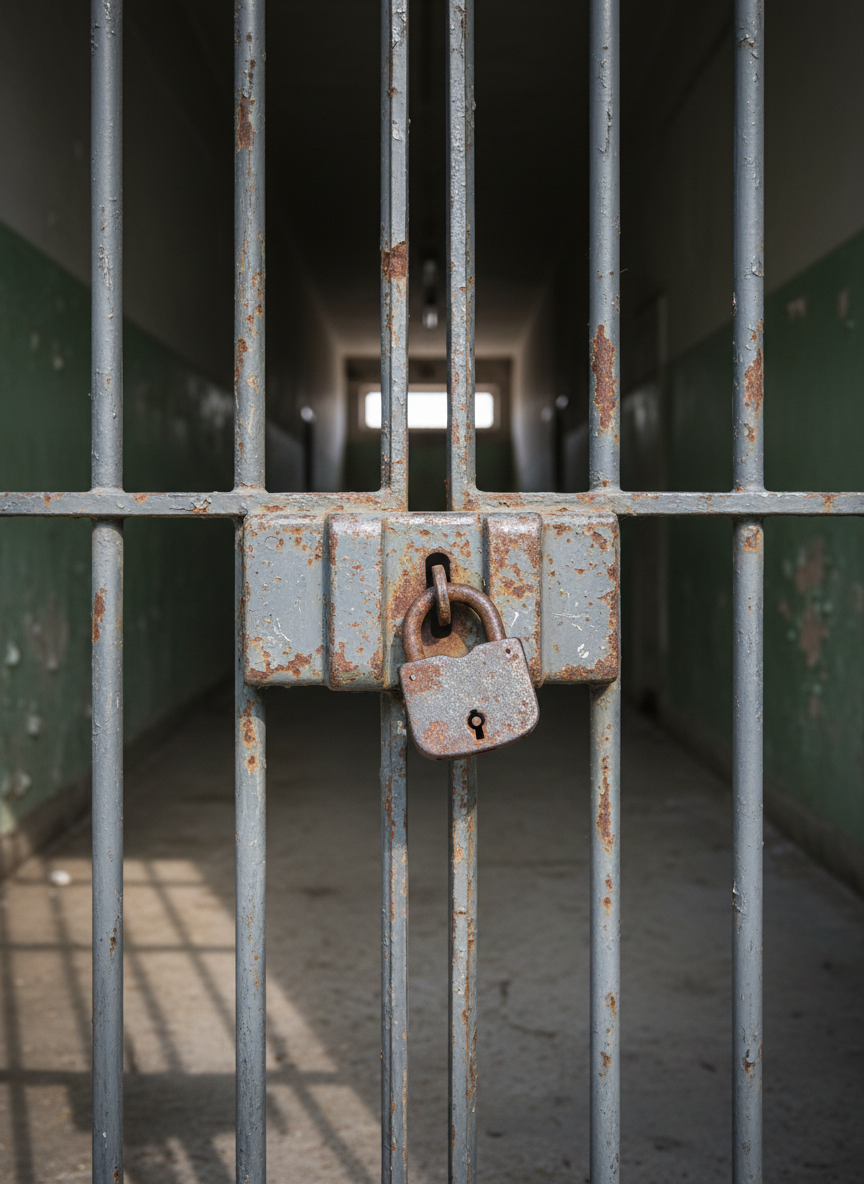
A close-up, photographic realism image of a heavy, rusted prison gate made of thick vertical steel bars and a solid lockbox, its chipped gray paint revealing raw metal beneath. The gate stands at the threshold of a dim concrete corridor, with peeling institutional paint on the walls and a narrow strip of daylight spilling in from an unseen window at the far end. Soft, diffused natural light from the side creates subtle highlights along the edges of the bars and casts long, somber shadows on the floor. Shot at eye level with the gate centered in the frame, the background gently blurred to emphasize the lock. The mood is serious and contemplative, conveying confinement and the urgent need for reform in a clean, documentary style.

Our Organizers

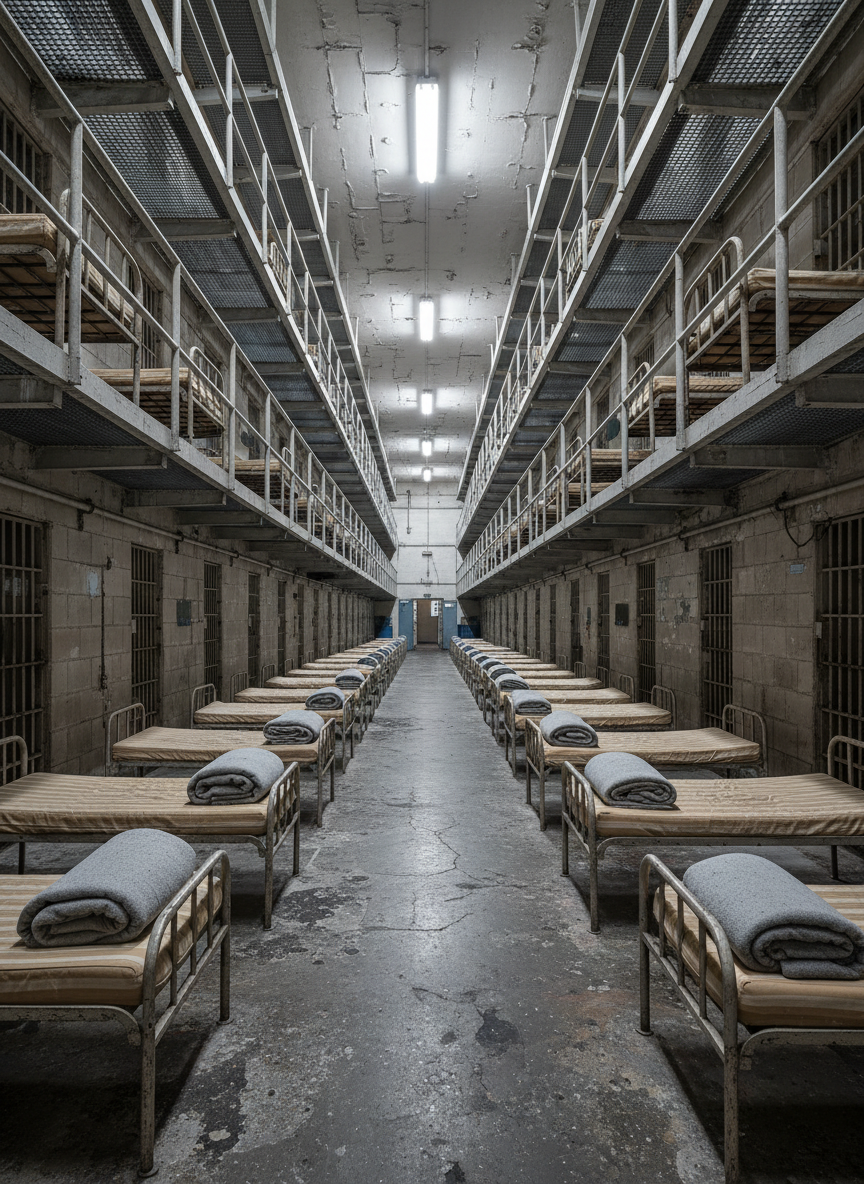
An expansive, eye-level, photographic image of an overcrowded prison cell block interior, devoid of people, featuring rows of empty metal bunks with thin, folded mattresses and tightly rolled blankets. The concrete floor is scuffed and stained, and the cinder block walls are marked with hairline cracks and faded paint. Personal items are absent, emphasizing stark uniformity. Overhead fluorescent lights cast a harsh, cold illumination that creates sharp, angular shadows beneath the bunks and along the corridor railings. The composition uses leading lines from the bunks and railings to draw the eye deep into the frame, capturing the scale and claustrophobia of the environment. The atmosphere is tense and oppressive, designed to visually underscore systemic overcrowding and inhumane conditions in a factual, professional documentary aesthetic.

Aarav Sharma

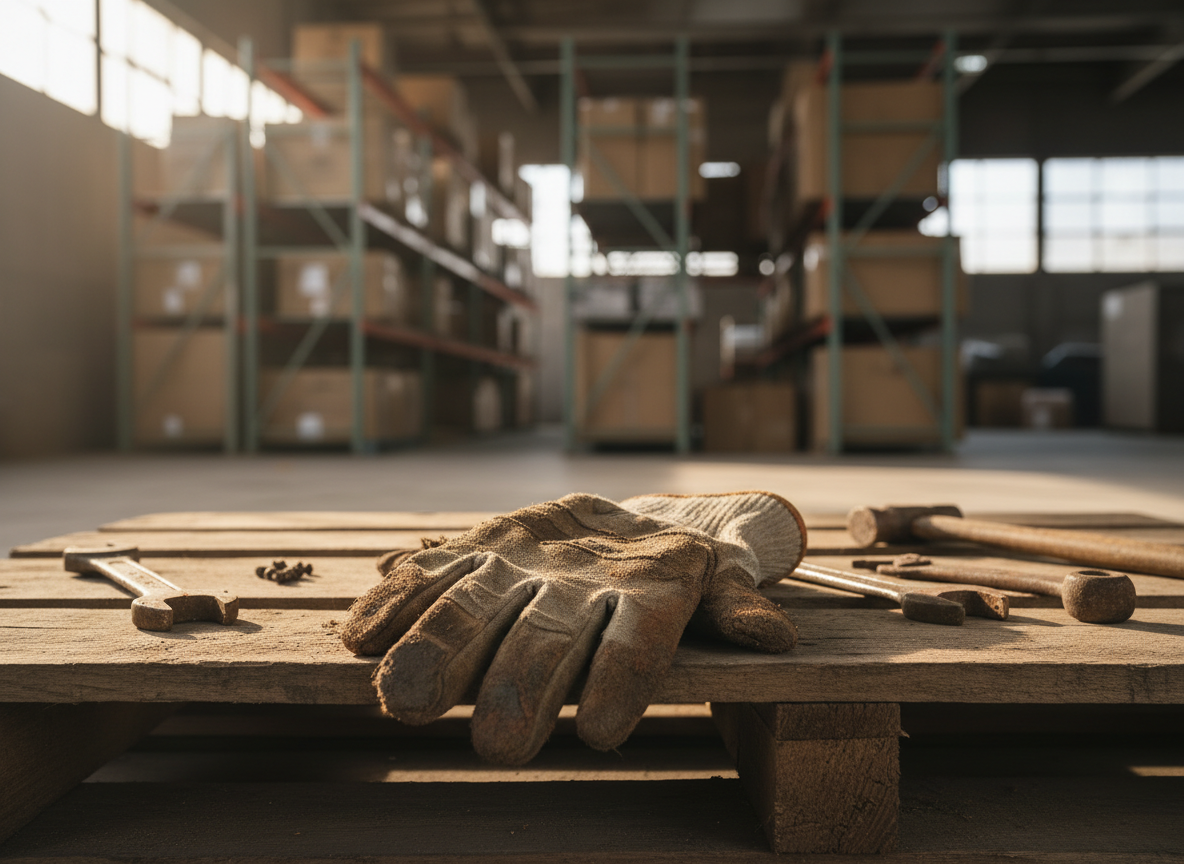
A detailed, photographic realism close-up of a worn prison-issued work glove resting on a rough wooden pallet inside a dim industrial warehouse space. The glove’s fabric is frayed at the fingertips, stained with grease and red Alabama clay, and the leather palm is cracked from overuse. Around it, scattered metal tools lie on the splintered surface of the pallet, their steel dulled and scratched. The background shows towering metal shelving and boxed supplies fading into soft blur. Warm, late-afternoon light enters through high, dirty windows, casting long, directional shadows and a subtle golden rim light on the glove’s edges. Captured from a slightly elevated angle with shallow depth of field, the composition isolates the glove as a quiet symbol of forced labor and exploitation, evoking a sober, reflective atmosphere appropriate for a professional prison reform organization.

Mateo García

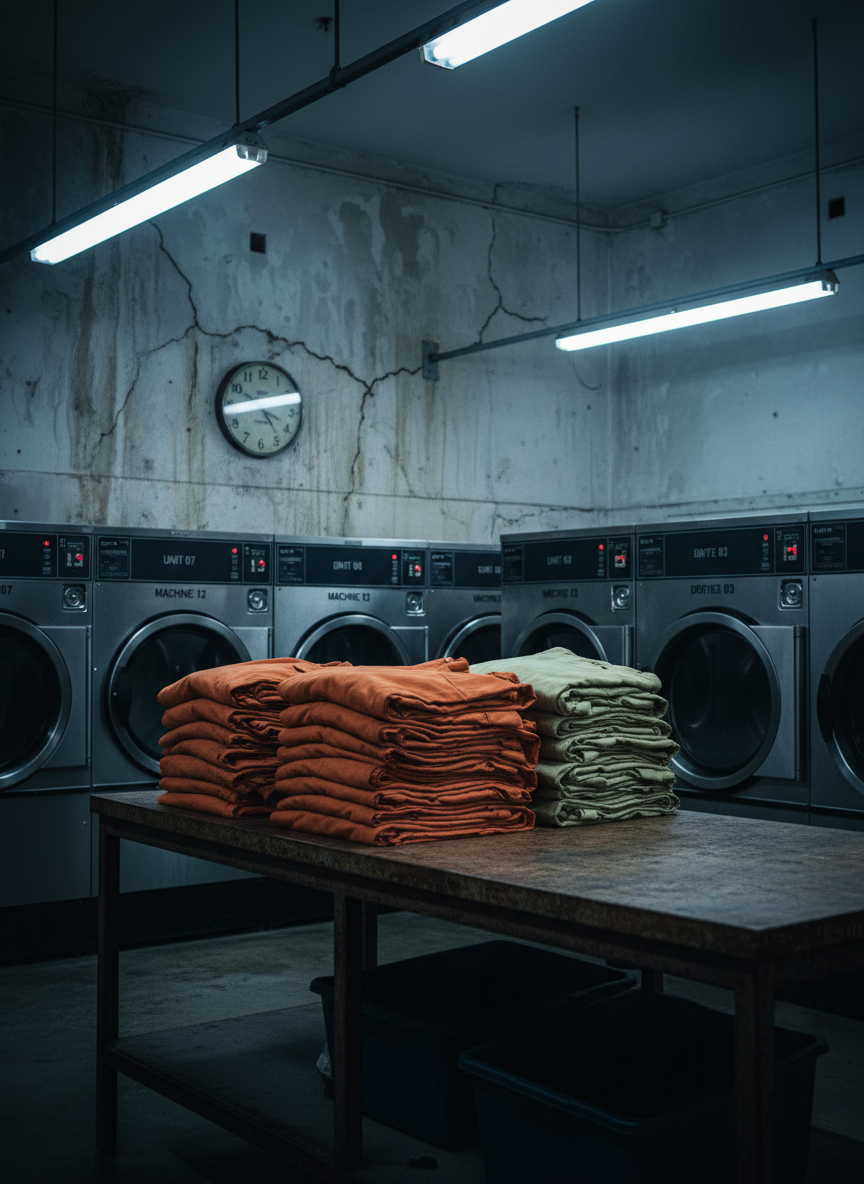
A photographic realism scene of a dim prison laundry workroom with industrial steel washing machines and dryers lined against a cracked concrete wall, each machine labeled with faded stenciled numbers. In the foreground, neatly stacked uniforms in dull orange and khaki lie on a scarred metal table, the fabric rough and worn. A solitary industrial clock hangs crookedly above, frozen at an arbitrary time. Overhead fluorescent fixtures provide cold, bluish light, creating harsh reflections on the machine doors and deep shadows under the table. Shot from a slightly low angle using the rule of thirds, with the table in sharp focus and the machines receding softly into the background, the mood is quietly defiant and somber, highlighting forced labor and monotonous work conditions in a sober, professional visual style.

Zuri Ndlovu

A close-up, photographic realism image of a heavy, rusted prison gate made of thick vertical steel bars and a solid lockbox, its chipped gray paint revealing raw metal beneath. The gate stands at the threshold of a dim concrete corridor, with peeling institutional paint on the walls and a narrow strip of daylight spilling in from an unseen window at the far end. Soft, diffused natural light from the side creates subtle highlights along the edges of the bars and casts long, somber shadows on the floor. Shot at eye level with the gate centered in the frame, the background gently blurred to emphasize the lock. The mood is serious and contemplative, conveying confinement and the urgent need for reform in a clean, documentary style.

Leila Haddad

An expansive, eye-level, photographic image of an overcrowded prison cell block interior, devoid of people, featuring rows of empty metal bunks with thin, folded mattresses and tightly rolled blankets. The concrete floor is scuffed and stained, and the cinder block walls are marked with hairline cracks and faded paint. Personal items are absent, emphasizing stark uniformity. Overhead fluorescent lights cast a harsh, cold illumination that creates sharp, angular shadows beneath the bunks and along the corridor railings. The composition uses leading lines from the bunks and railings to draw the eye deep into the frame, capturing the scale and claustrophobia of the environment. The atmosphere is tense and oppressive, designed to visually underscore systemic overcrowding and inhumane conditions in a factual, professional documentary aesthetic.

Hiroshi Tanaka

A detailed, photographic realism close-up of a worn prison-issued work glove resting on a rough wooden pallet inside a dim industrial warehouse space. The glove’s fabric is frayed at the fingertips, stained with grease and red Alabama clay, and the leather palm is cracked from overuse. Around it, scattered metal tools lie on the splintered surface of the pallet, their steel dulled and scratched. The background shows towering metal shelving and boxed supplies fading into soft blur. Warm, late-afternoon light enters through high, dirty windows, casting long, directional shadows and a subtle golden rim light on the glove’s edges. Captured from a slightly elevated angle with shallow depth of field, the composition isolates the glove as a quiet symbol of forced labor and exploitation, evoking a sober, reflective atmosphere appropriate for a professional prison reform organization.

Amara Okafor

A photographic realism scene of a dim prison laundry workroom with industrial steel washing machines and dryers lined against a cracked concrete wall, each machine labeled with faded stenciled numbers. In the foreground, neatly stacked uniforms in dull orange and khaki lie on a scarred metal table, the fabric rough and worn. A solitary industrial clock hangs crookedly above, frozen at an arbitrary time. Overhead fluorescent fixtures provide cold, bluish light, creating harsh reflections on the machine doors and deep shadows under the table. Shot from a slightly low angle using the rule of thirds, with the table in sharp focus and the machines receding softly into the background, the mood is quietly defiant and somber, highlighting forced labor and monotonous work conditions in a sober, professional visual style.

Soren Jensen

A close-up, photographic realism image of a heavy, rusted prison gate made of thick vertical steel bars and a solid lockbox, its chipped gray paint revealing raw metal beneath. The gate stands at the threshold of a dim concrete corridor, with peeling institutional paint on the walls and a narrow strip of daylight spilling in from an unseen window at the far end. Soft, diffused natural light from the side creates subtle highlights along the edges of the bars and casts long, somber shadows on the floor. Shot at eye level with the gate centered in the frame, the background gently blurred to emphasize the lock. The mood is serious and contemplative, conveying confinement and the urgent need for reform in a clean, documentary style.

Nia Roberts